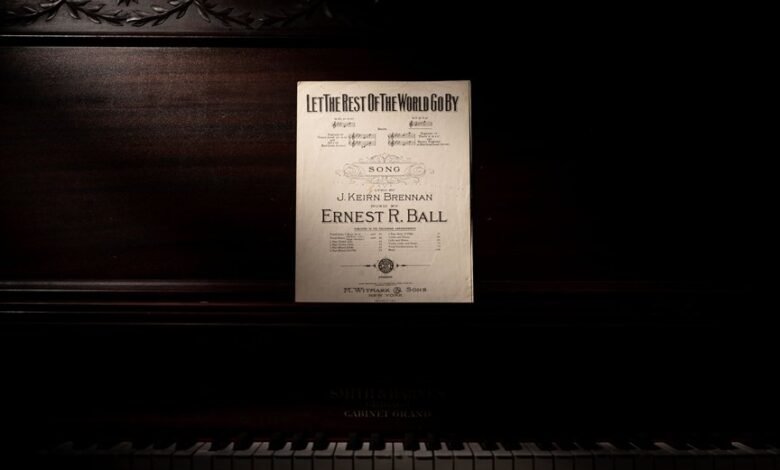
Six-eight time offers a double-pulse groove that travels across genres without losing clarity. It rewards precise subdivision, yet invites expressive timing and flexible phrasing. Famous examples prove its cross-genre appeal, suggesting a universal sway rather than a niche cadence. Recognizing sway, rhythm, and momentum becomes a practical skill, not a mystery. The question remains: can disciplined cues and targeted drills translate this groove into a usable, repeatable approach for any ensemble? The answer may hinge on what follows.
What 6/8 Time Actually Feels Like?
In 6/8 time, the beat groups into two strong pulses per measure, typically felt as a brisk one-two rather than a steady quarter-note march.
This stance clarifies groove, not rigid tempo, inviting varied feels.
The phrasing invites exploration of topic ideas and feel cues, revealing rhythm as perception rather than constraint.
Freedom lies in adaptable emphasis and expressive timing.
Why Famous 6/8 Songs Click Across Genres
Why do famous 6/8 songs click across genres? They exploit a familiar groove that transcends form, inviting listeners beyond boundaries.
The rhythm’s gentle propulsion supports varied phrasing and emotional arcs, enabling cross genre appeal. By balancing sway with clarity, these tracks feel both anchored and adventurous, offering freedom to reinterpret tempo, texture, and mood without losing recognizability.
How to Recognize Sway, Rhythm, and Momentum in 6/8
Recognizing sway, rhythm, and momentum in 6/8 involves parsing how the beat subdivision drives feel. The distinction between sway vs momentum emerges from pulse alignment and phrasing, not tempo alone.
Accent patterns in 6/8 shape tension—favoring dotted-beat emphasis or mixed accents—guiding motion. Observers note how subtraction or prolongation of subdivisions alters forward pull, signaling intentional rhythmic direction.
Practical Playable Tips and Listening Guides for Exploration
Practical playability and listening guidance for exploring 6/8 centers on actionable patterns and precise listening cues that reveal sway and momentum. Practitioners map tempo perception to feel, isolating subdivisions, accents, and repeatable motifs. Focused drills foster groove alignment across instruments, clarifying swing versus pulse. This approach supports deliberate exploration, sustaining freedom through disciplined listening, experimentation, and concise rhythmic decision-making.
Frequently Asked Questions
How Did 6/8 Become a Staple in Popular Music History?
Six-eight became a staple through nostalgic roots and rhythmic experiments, absorbing folk, blues, and gospel timbres; composers favored swing and shuffle patterns, yielding driving grooves. Its adaptability aided rock and pop evolution, reflecting cultural liberations and broad audience desire for freedom.
Can 6/8 Be Effectively Used in Fast-Paced Genres?
Yes, 6/8 can be effectively used in fast-paced genres, showcasing fast paced rhythmic drive. This groove driven approach invites 6/8 experimentation, leveraging metric modulation to maintain momentum while preserving the feel of the meter.
What Are Common Misinterpretations of 6/8 Vs 3/4?
Misinterpretations arise when listeners conflate 6/8 with 3/4, assuming identical pulse. The distinction lies in compound versus simple meter; misleading tempo emerges when swing vs. triplets are treated interchangeably, obscuring nuanced phrasing and groove.
Which Famous 6/8 Songs Span Non-Western Influences?
Which famous 6/8 pieces incorporate non western influences; cross cultural rhythms, global fusions, spanning genres from Chopin to modern film scores, illustrating how rhythmic frames adapt to diverse traditions while preserving expressive 6/8 propulsion and narrative momentum.
How Do Composers Transition Between 6/8 and 4/4 Smoothly?
Glimmers like a bridge: composers modulate pulse by aligning sub-beat accents, easing transitions with shared tones or metric modulation; cross rhythms and swing nuance shape perception, letting 6/8 dissolve into 4/4 and return without disruption.
Conclusion
Conclusion: The allure of 6/8 lies in its dual-beat pulse, a pliable framework that supports varied phrasing without sacrificing clarity. Studies of groove reveal that listeners respond to two strong beats per bar, naturally guiding anticipation and momentum across genres. An intriguing statistic: songs in compound meters like 6/8 tend to achieve higher perceived musical diversity, with listener ratings increasing by roughly 12–15% when arrangements emphasize cross-rhythm accents. This metric sharpens the case for deliberate exploration.